- Flexible Hot Zone Configuration - Choice of metal or graphite hot zones with two-sided, four-sided, or six-sided heating enables precise thermal control across a wide range of applications and operating temperatures.
- Uniform and Faster Cooling - The gas circulation cooling fan ensures efficient internal gas movement, significantly accelerating cooling rates and improving overall process cycle time.
- Controlled Processing Environment - The partial pressure control system allows accurate regulation of vacuum and inert gas levels, minimizing oxidation risks when processing materials with high vapour-pressure elements.
- High Productivity through Forced Cooling - The integrated heat exchanger and high-speed blower enable rapid forced cooling, making the furnace suitable for demanding sintering and hardening applications with shorter turnaround times.
- Capability for Reducing Atmosphere processing - The hydrogen introduction system supports processing under reducing conditions, enhancing surface quality and metallurgical integrity while ensuring safe and controlled operation.
- Process Versatility and Reliability - Multiple heating, cooling, and atmosphere control options make the furnace adaptable to diverse materials and applications with consistent, repeatable results.
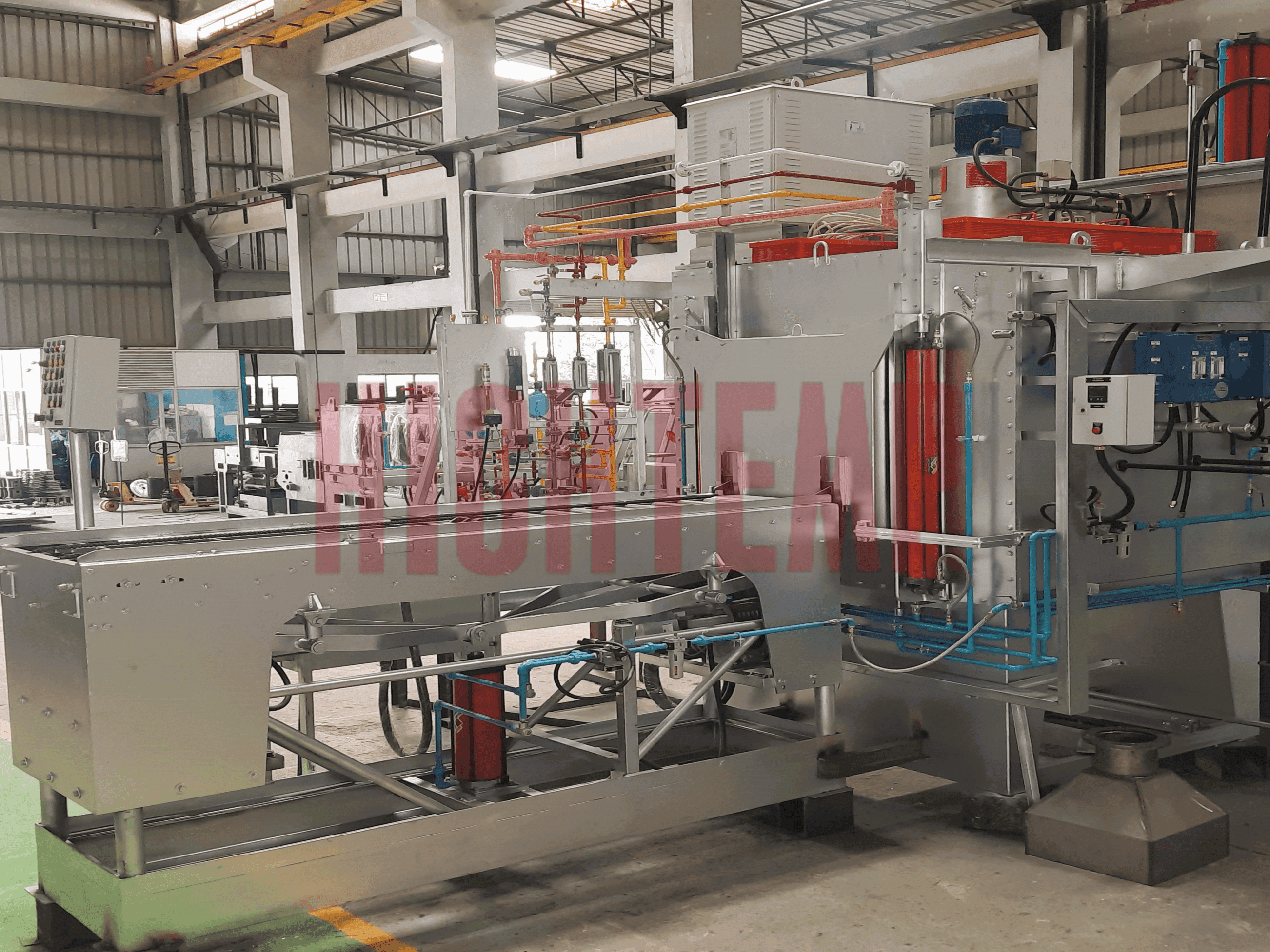

A sealed quench furnace is a highly efficient, controlled atmosphere furnace designed for heat treatment processes such as hardening and tempering. It is widely used in the automotive and industrial sectors for components requiring superior mechanical properties and wear resistance. For the heat treatment of engine components such as connecting rods and valves made from materials like 4130, 4340, 42CrMo4, En-8D, A217, and A351 Hardening and Tempering process is implemented where the components are heated to their austenitizing temperatures in a controlled atmosphere to prevent oxidation and decarburization. Rapid quenching in oil or polymer quenchants, to achieve desired hardness and microstructure. Components are further reheated below the critical temperature to achieve the required toughness, ductility, and stress relief. This furnace can perform other heat treatment processes, including carburizing, , carbonitriding, normalizing, nitrocarburizing, nitriding, austempering, neutral hardening, annealing, and bright hardening..
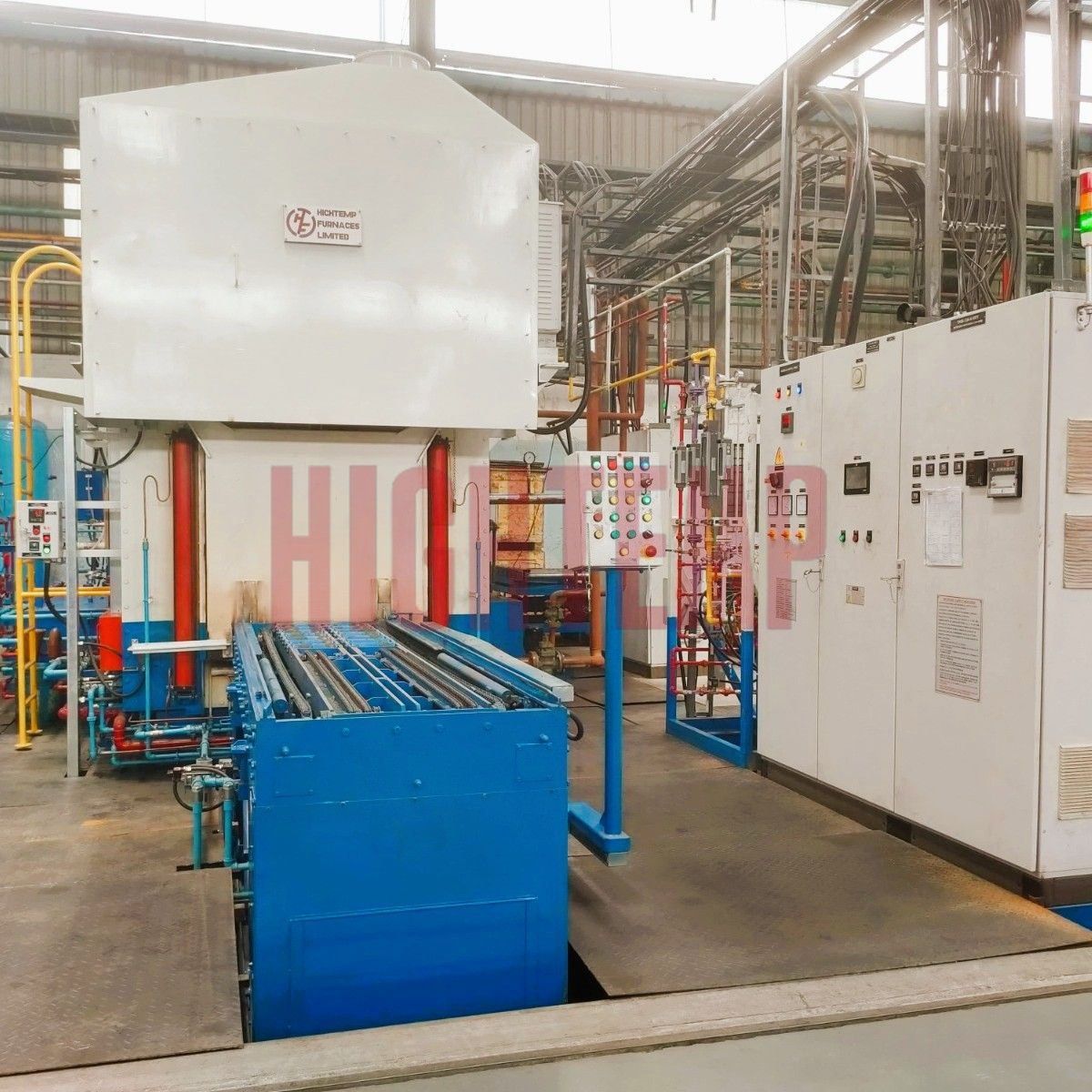
HIGHTEMP Sealed Quench Furnace is the ideal solution for the carbonitriding and tempering of high-performance components, ensuring enhanced surface hardness, wear resistance, and toughness. This furnace is particularly effective for components such as gears, shafts, pins, bolts, fasteners, crankshafts, tool & die parts, and bearings. Using materials like EN8, EN9, EN19, EN24, 16MnCr5, 20MnCr5, SAE 8620, and EN31 (high-carbon steels), it ensures consistent, superior-quality heat treatment. Carbonitriding is a surface hardening process where carbon and nitrogen are diffused into the steel surface, improving its hardness, wear resistance, and fatigue strength. The sealed quench furnace ensures a controlled atmosphere to minimize oxidation and decarburisation. After carbonitriding, tempering is used to relieve internal stresses and reduce brittleness while retaining the hardness of the treated surface. This furnace can perform other heat treatment processes, including carburizing, hardening, normalizing, nitrocarburizing, nitriding, austempering, neutral hardening, annealing, and bright hardening.
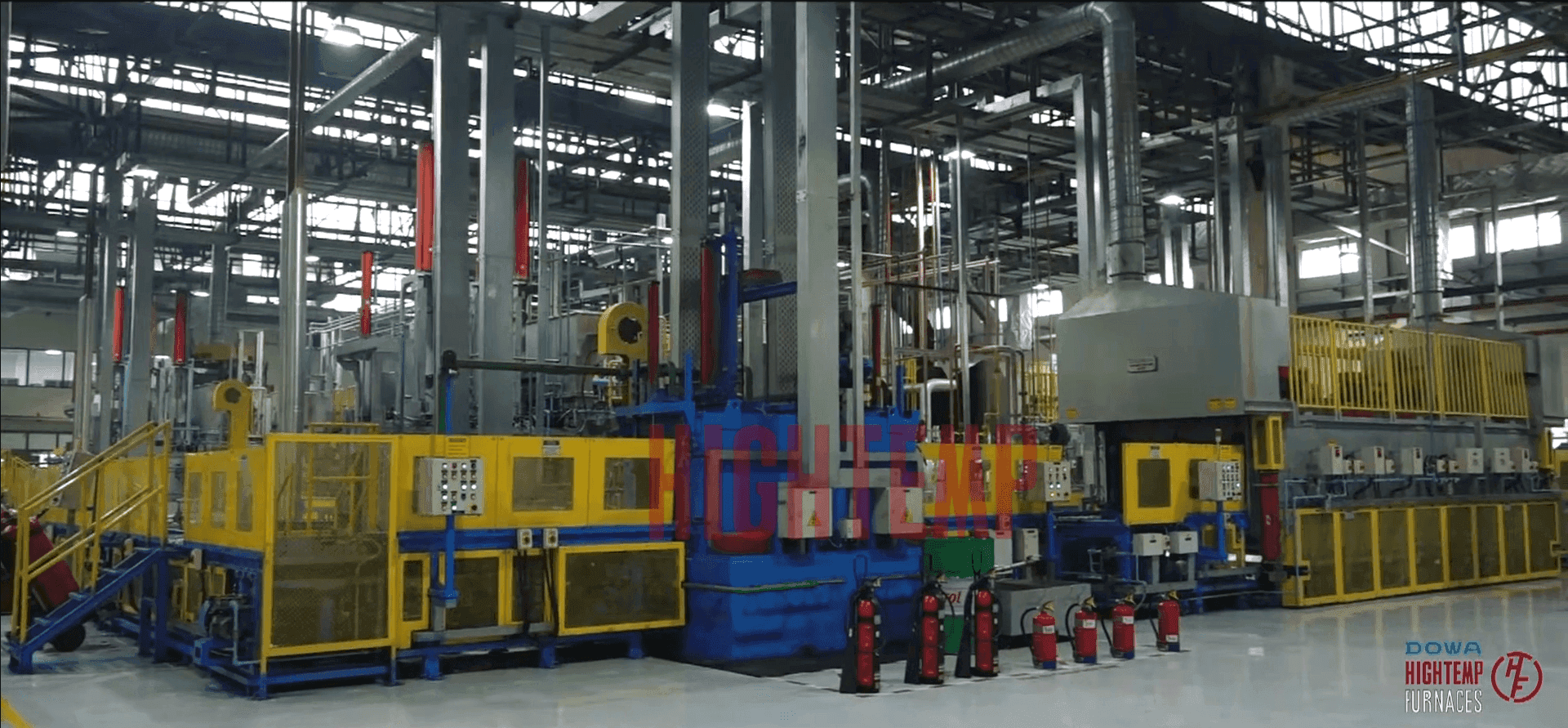
The HIGHTEMP Continuous Gas Carburising Furnace is an advanced heat treatment solution designed for high-volume production and precise carburising of components. Built for efficiency and consistency, this furnace uses a continuous single-track design, making it ideal for industries that demand superior quality, cost-effective operations, and high throughput. Operating at temperatures of up to 950°C, the furnace introduces carbon into the surface layer of steel components to improve hardness, wear resistance, and fatigue strength, while maintaining a tough core. With options for endothermic gas or nitrogen-methanol atmospheres, it ensures optimal carburising conditions tailored to specific requirements.
Ready To Get Started ?
Get In Touch With Us Today!