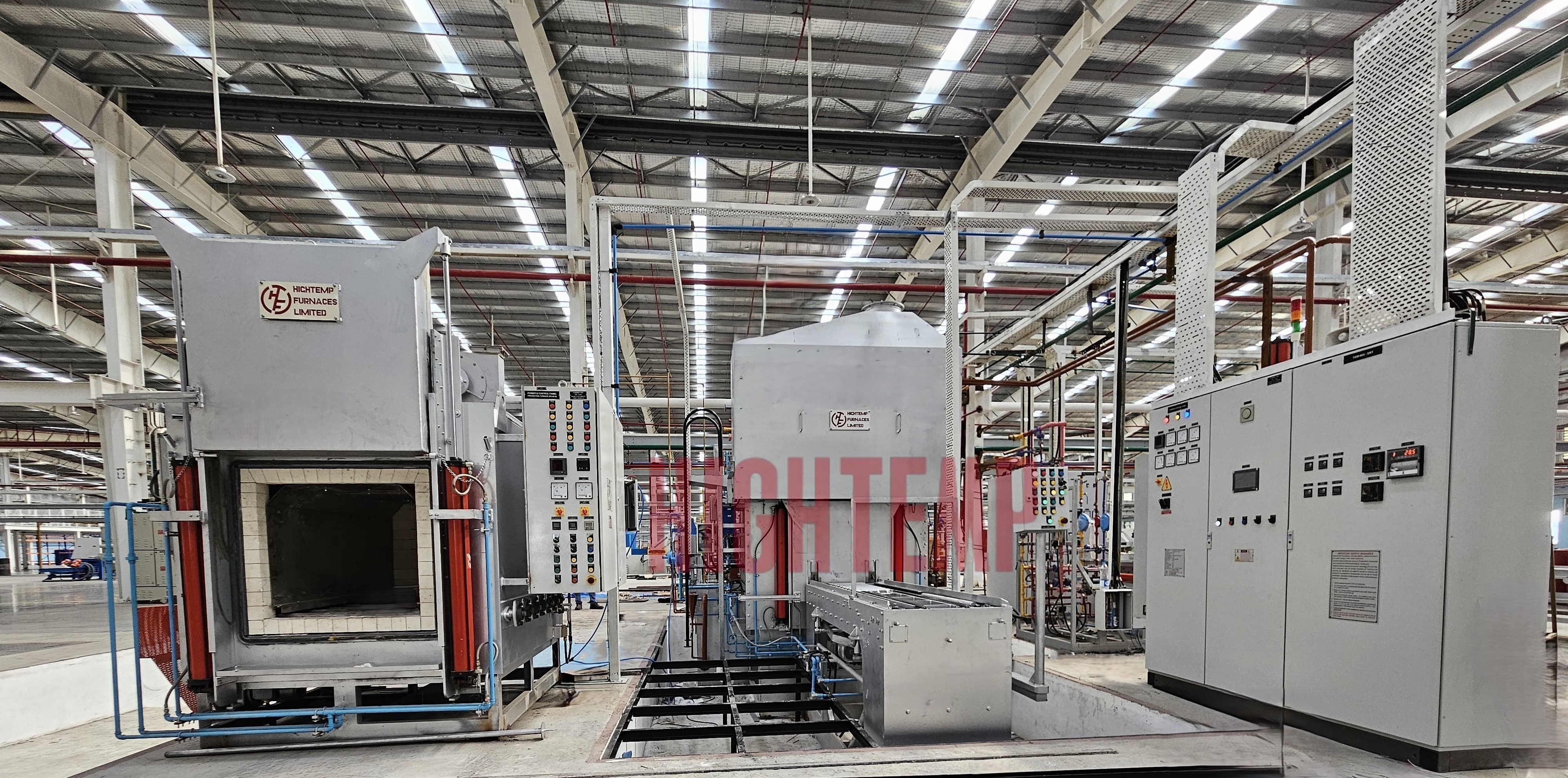
In today’s manufacturing industry, Batch Furnaces are ideal for heat-treating alloy steel components—ranging from gears and shafts to precision automotive and aerospace parts. Their popularity comes from their ability to deliver precise process control, operational flexibility, and consistent results—the key factors behind superior heat treatment quality.
Batch furnaces are versatile and well-suited for Carburizing, Carbonitriding, and Through Hardening processes.
Why Batch Furnaces Are Ideal for Alloy Steel
Batch furnaces operate by heating and cooling components in controlled “batches,” giving operators full command over temperature, atmosphere, and timing.
For alloy steels, this is crucial because small changes in temperature or atmosphere composition can directly affect case depth, hardness, and microstructure.
🔹 How Alloy Steel Components Work in Carburizing
During Carburizing, alloy steel parts are loaded into the batch furnace and heated to 880–950°C in a carbon-rich gas atmosphere.
At this stage, carbon atoms diffuse into the surface layer of the alloy steel. The alloying elements such as chromium, molybdenum, or nickel enhance this diffusion and improve hardenability. After sufficient carbon absorption, the furnace transfers parts to a quench tank, where rapid oil quenching hardens the surface while keeping the core tough and ductile.
🔹 How Alloy Steel Components Work in Carbonitriding
In Carbonitriding, components are heated to 850–880°C in an atmosphere enriched with both carbon and ammonia. The nitrogen from ammonia penetrates the steel surface along with carbon, forming hard nitrides that boost surface wear resistance.
Alloy steels respond exceptionally well because their chromium and nickel content stabilize the surface structure and improve fatigue resistance.
🔹 How Alloy Steel Components Work in Through Hardening
Through Hardening (Quench & Tempering) is designed to harden the entire cross-section of alloy steels.
Inside the batch furnace, components are heated to 850–900°C to form austenite, then rapidly quenched in oil or polymer. The alloying elements — chromium, molybdenum, or vanadium — help achieve deep hardness and prevent brittleness.
After quenching, tempering follows at controlled temperatures to balance hardness and toughness.
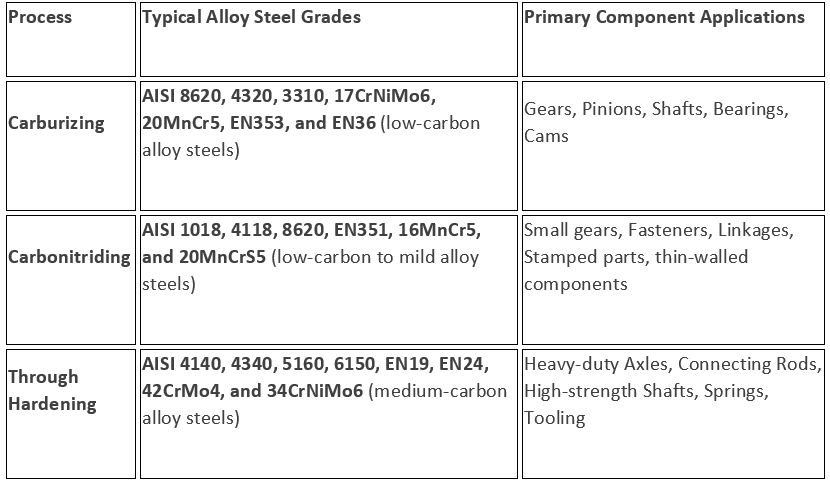
Common Alloy Steel Grades for Each Process
Batch Furnaces continue to be the foundation of modern heat treatment, providing exceptional precision, flexibility, and consistency for processing alloy steel components. Whether it’s Carburizing for surface hardness, Carbonitriding for wear resistance, or Through Hardening for deep, uniform strength — batch furnaces ensure superior metallurgical results across every cycle.
At HIGHTEMP Furnaces Ltd, our Sealed Quench Batch Furnace systems are engineered for accurate atmosphere control, uniform heating, and repeatable performance. Designed to handle a wide variety of alloy steel grades, these furnaces deliver the reliability and quality demanded by automotive, aerospace, and engineering industries.